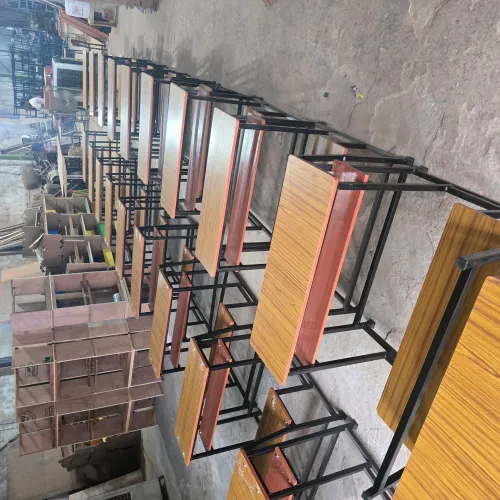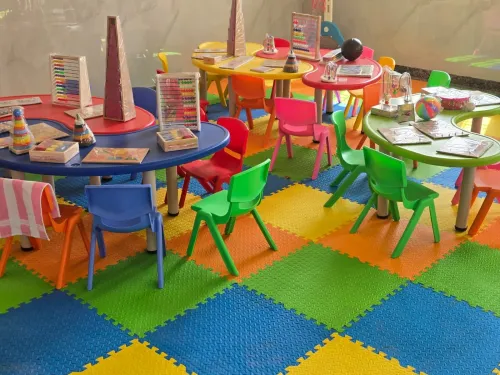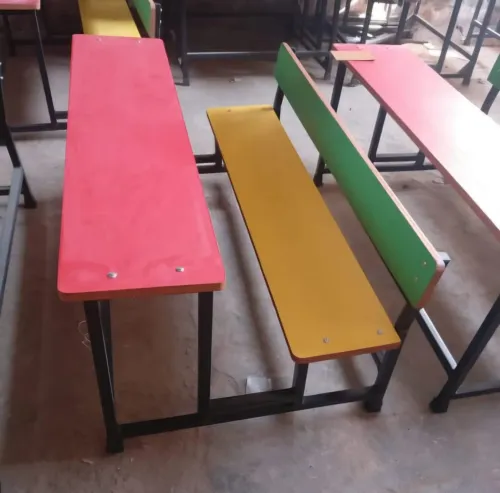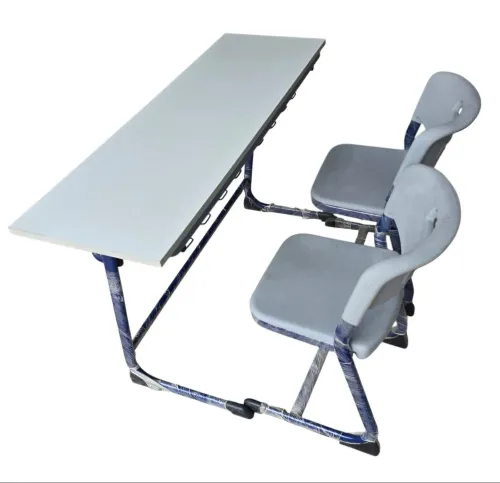
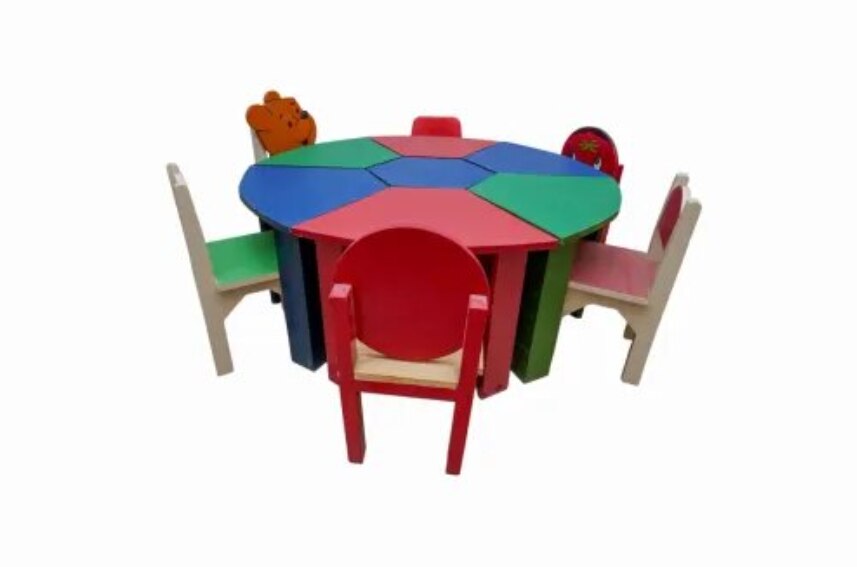
A hexagonal table can make peer discussion easier, but it can also waste wall space, complicate storage and obstruct row-based teaching. By comparing each shape’s footprint, seating, supervision and flexibility, you can choose a layout that works with your Delhi classroom rather than judging from a product photograph.
Key takeaways
- Choose hexagons for shared group work and face-to-face discussion.
- Use rectangles for rows, direct instruction and maximum wall alignment.
- Measure chair clearance, walkways and storage before ordering tables.
- Confirm dimensions, edge safety, materials, warranty and delivery terms.
How Hexagonal, Round, Square, Rectangular and Trapezoidal Tables Differ
The best of the kids classroom table shapes depends on how you teach: choose hexagons for small-group collaboration, rectangles for rows and direct instruction, and trapezoids for rooms that need both.
| Shape | Main advantage | Best fit | Main compromise |
|---|---|---|---|
| Hexagonal | Six defined sides support conversation, shared activities and teacher access around a cluster | Free-play, puzzles, art and group projects | Corners are poor individual work positions; wall placement and storage are awkward |
| Round | Everyone faces the centre and there are no sharp corners | Discussion, circle-time extensions and shared games | Leaves curved gaps in clusters and wastes perimeter space |
| Square | Compact footprint supports pairs or four-child groups | Small rooms, partner work and flexible layouts | Offers less shared surface than a larger rectangle |
| Rectangular | Lines up efficiently with walls, storage and teaching equipment | Row-based lessons, writing and individual work | Encourages a front-facing arrangement |
| Trapezoidal | Joins into rows, arcs or clusters more flexibly than a rectangle | Mixed teaching modes and frequently rearranged rooms | Requires careful matching of angles and dimensions |
In comparing kids hexagonal tables versus other shapes in Delhi, ask for a dimensioned drawing showing overall width, side length, tabletop thickness, underside clearance and base footprint. Reject “six-seater” as a capacity claim unless it states chair width and whether corner positions count.
For a preschool hexagonal table in Delhi, match the table and chair to the children’s stature band, not merely the label “preschool.” Check EN 1729 size marks, then test three layouts: a cooperative cluster, a teaching row and a clear perimeter route.
A hexagon that works in a product photograph can fail once chairs, bags and teacher movement are added.
Where Hexagonal Tables Help—and Where They Create Problems
Hexagonal tables earn their space when children need to face one another rather than a single front edge. The strongest hexagonal kids table benefits are shared materials, easy small-group conversation and a defined work position for each child.
Regular hexagons tessellate into clusters without the triangular gaps that circular tables can create. This supports puzzles, art, free-play construction and project work, while letting a teacher reach several groups without walking around long rectangular rows.
Choose a hexagonal layout when you need:
- A preschool activity table for collaborative play and shared equipment
- A small-group table where children can see one another and the teacher
- A circle-time extension that keeps children close without forming a full circle
The apparent floor-space saving disappears after you add chair pull-out space, bags, cleaning access and walking routes. The corner zones also work poorly as individual positions, so a “six-seater” label means little without the assumed chair width and seat envelope.
A hexagon is less efficient against walls, in narrow rooms and in straight teaching rows. Rectangular tables combine more easily with storage, wall-mounted displays and row-based instruction; individual desks suit quiet, independent work better. Storage is awkward too, because six-sided tops leave irregular gaps unless nesting is designed into the furniture.
Treat corners as a safety specification, not a shape verdict. Require radiused vertices, sealed smooth edges, no projecting fasteners and a stable base. For a preschool hexagonal table in Delhi, match the table and chair to the children’s stature band under EN 1729; a low chair with an adult-height tabletop creates poor posture.
How Many Children Can a Hexagonal Table Seat Comfortably?
A “six-seater” label means little without the chair assumption behind it. Calculate capacity from the usable length of each straight side, not from the tabletop’s total perimeter. Use this formula: usable side length ÷ (actual chair width + required side clearance), rounded down, then exclude corner positions unless the supplier explains how those seats work.
Ask for a dimensioned drawing showing:
- overall tabletop width and each side length
- tabletop thickness and underside clearance
- base footprint and leg position
- the assumed chair width and number of users
For example, a 400 mm-wide child chair with 50 mm clearance on each side needs about 500 mm of side length. A 900 mm straight side therefore supports one comfortable position only if you also need space for elbows, books and movement; forcing two children onto it creates shoulder contact and restricts drawing.
A preschool hexagonal table in Delhi also needs a size match, not merely a seat count. Check the intended stature band and coordinated chair and table dimensions under EN 1729. A low preschool chair paired with a high tabletop leaves knees trapped, raises shoulders and encourages poor posture.
Check the edge radius, leg clearance and stability as well.
Count six positions only when children sit along the six straight sides. Treat corner areas as unusable unless a trial with the specified chairs proves otherwise. Insist on the actual chair envelope before comparing suppliers.
Measure the Complete Classroom Footprint Before Choosing a Shape
Draw the whole room to scale before comparing kids classroom table shapes. Mark columns, radiators, electrical points, doors and door swings, then add the manufacturer’s complete footprint: tabletop width, side length, base, underside clearance and the chair pulled out for a child to sit safely.
A “six-seater” means little without the chair width and clearance envelope.
| Option | Layout strength | Check before choosing |
|---|---|---|
| Hexagonal | Clusters and shared activities | Angled sides can obstruct chairs, wall placement and diagonal routes |
| Round | Shared conversation and flexible grouping | Measure the wider circular chair envelope and cleaning path |
| Square | Compact small-group arrangements | Corners can tighten circulation between groups |
| Rectangular | Rows, walls, storage and teacher-led work | Confirm every child still has pull-out clearance |
| Trapezoidal | Reconfigurable arcs and rows | Test gaps and stability when several tables join |
Use masking tape or cardboard at full scale, then test the room in its busiest arrangement:
- Keep a continuous route to every door, storage unit and wash area; do not count a gap that disappears when chairs are occupied.
- Pull out every chair, place bags where children actually leave them, and leave a clear cleaning path for a mop or vacuum.
- Stand and sit at the teacher position. Check whether tabletops, chair backs, children’s heads or neighbouring clusters hide any learner.
- Open cupboards and doors fully, and test the layout during an evacuation drill.
This is the practical test for kids hexagonal tables versus other shapes in delhi: count usable movement space, not just tabletop area. A preschool hexagonal table in Delhi also needs a table-and-chair size matched to children’s stature under EN 1729; mixing a low chair with a high tabletop defeats the layout.
A Procurement Checklist for Comparing Tables and Suppliers
Ask each supplier for a dimensioned drawing, not a product photograph. It must show overall width, side length, tabletop thickness, underside clearance, base footprint and stated user count; “six-seater” means little without seat width and the chair’s pulled-out envelope.
For a preschool hexagonal table in Delhi, request the intended stature band and matching chair and table sizes. Ask for conformity to EN 1729 size marks or another named school-furniture standard. A low preschool chair paired with an adult-height surface creates poor elbow position and restricted leg clearance.
- Tabletop: laminated plywood, solid wood, or moulded polymer; specify core thickness, edge radius, finish, and resistance to water, stains and routine disinfectant.
- Structure: steel or hardwood grade, joint type, adjustable feet, underside clearance, and replacement-part availability.
- Safety evidence: static vertical-load result, horizontal stability or tipping test, wobble inspection, fastener security, and the stated test load and method.
- Documents: signed specification sheet, assembly instructions, cleaning guidance, warranty, material or finish declaration, and delivery inspection procedure.
| Shape | Procurement question | Practical implication |
|---|---|---|
| Hexagonal | Does the base stay stable when children lean on one side? | Strong hexagonal kids table benefits in clusters, but check teacher access. |
| Rectangular | Can units join without gaps? | Easier rows, walls and storage. |
| Trapezoidal | Can units reverse or separate? | More flexible for frequent rearrangement. |
Indera Furnishers is worth comparing only after its drawing, size band, test evidence and warranty are placed beside competing quotations.
Related product
 | Kids Hexagonal Table Set ₹12000 The Kids Hexagonal Table Set by Indera Furnishers is an exciting and interactive game set designed for preschools, nurseries, and activity areas. View product → |
Frequently asked questions
How do hexagonal tables compare with round, square, rectangular and trapezoidal tables?
Hexagonal tables support face-to-face group work while retaining straighter edges than round tables. Rectangular tables suit rows and direct instruction, square tables work for compact arrangements, round tables encourage discussion, and trapezoidal tables combine several layouts in one room.
Where do hexagonal kids tables help, and where can they cause problems?
Hexagonal tables help small groups collaborate and allow several children to face one another. They can waste floor space near walls, complicate straight rows and create awkward gaps when mixed with unsuitable furniture.
How many children can a hexagonal table seat comfortably?
Use the table’s actual dimensions, edge length and chair width rather than relying on a shape alone. Allow each child enough elbow room, chair clearance and access to leave without disturbing others, then verify the layout with full-size measurements.
What should you measure before choosing a classroom table shape?
Measure the complete room, including doors, windows, columns, storage, teaching areas and fixed equipment. Mark table dimensions, chair pull-out space and clear walking routes on the floor before ordering.
What should you check when comparing kids tables and suppliers?
Compare overall dimensions, seat capacity, rounded edges, stability, surface durability, cleanability, materials, finish, replacement parts, warranty, delivery access and installation terms.
Keywords